Table of Contents
- Key Takeaways
- Quick Verdict
- Product Overview & Specifications
- Real-World Performance & Feature Analysis
- Design & Build Quality
- Performance in Real Use
- Comfort & Fit for Extended Wear
- Durability & Long-Term Reliability
- Pros & Cons
- Comparison & Alternatives
- Cheaper Alternative: Sony MDR-ZX110
- Premium Alternative: Audio-Technica ATH-M20x
- Buying Guide / Who Should Buy
- Best For Beginners
- Best For Active Users
- Not Recommended For
- FAQ
Searching for affordable over-ear headphones that can handle the gym without breaking the bank? You’ve likely encountered Panasonic’s XBS Deep Bass models, promising solid sound at a fraction of premium prices. After testing these matte black headphones through workouts, commutes, and Netflix binges, I can tell you they’re not perfect – but they deliver where it counts for the right user.
Most budget headphones fail at either comfort or sound quality, but Panasonic’s decades of audio experience show through here. The question isn’t whether these compete with $300 headphones (they don’t), but whether they’re the smart choice for someone who needs reliable performance without the premium price tag.
Key Takeaways
- Exceptional value for under $25, outperforming many generic brands in sound clarity and bass response
- Surprisingly comfortable for extended wear, but the non-breathable earpads can get warm during intense workouts
- Durable build with flexible components that withstand daily abuse better than expected at this price
- Limited sound isolation compared to noise-canceling models – these won’t block out loud gym environments completely
- Wired design provides zero latency for gaming but limits mobility compared to Bluetooth options
Quick Verdict
Best for: Budget-conscious users needing reliable wired headphones for gym workouts, home entertainment, and casual listening where extreme noise isolation isn’t required.
Not ideal for: Audiophiles seeking pristine highs, travelers needing active noise cancellation, or users who prioritize wireless convenience.
Core strengths: The XBS bass technology actually delivers noticeable low-end punch without muddying mids, the adjustable headband provides secure fit during movement, and the 6.5-foot cord offers practical flexibility.
Core weaknesses: Sound leakage at high volumes, average microphone quality for calls, and the matte finish shows fingerprints easily.
Product Overview & Specifications
Panasonic’s RP-HT161 series represents their entry-level over-ear offering, positioning itself as a workhorse for daily use rather than a premium audio experience. The XBS (Extra Bass System) technology isn’t just marketing – it’s a deliberate tuning that emphasizes low frequencies without completely sacrificing vocal clarity.
| Specification | Details |
|---|---|
| Driver Size | 30mm neodymium drivers |
| Frequency Response | 10Hz – 24,000Hz |
| Maximum Power | 1000mW |
| Cord Length | 6.5 feet (2.0m) |
| Connector | 3.5mm gold-plated plug |
| Earpad Material | Protein leather with foam padding |
| Weight | 6.4 ounces (182g) |
What these specs don’t tell you is how they translate to real use. The 30mm drivers are larger than many budget competitors, providing better dynamic range, while the 1000mW power handling means they can get loud enough to overcome background noise without distortion.
Real-World Performance & Feature Analysis
Design & Build Quality
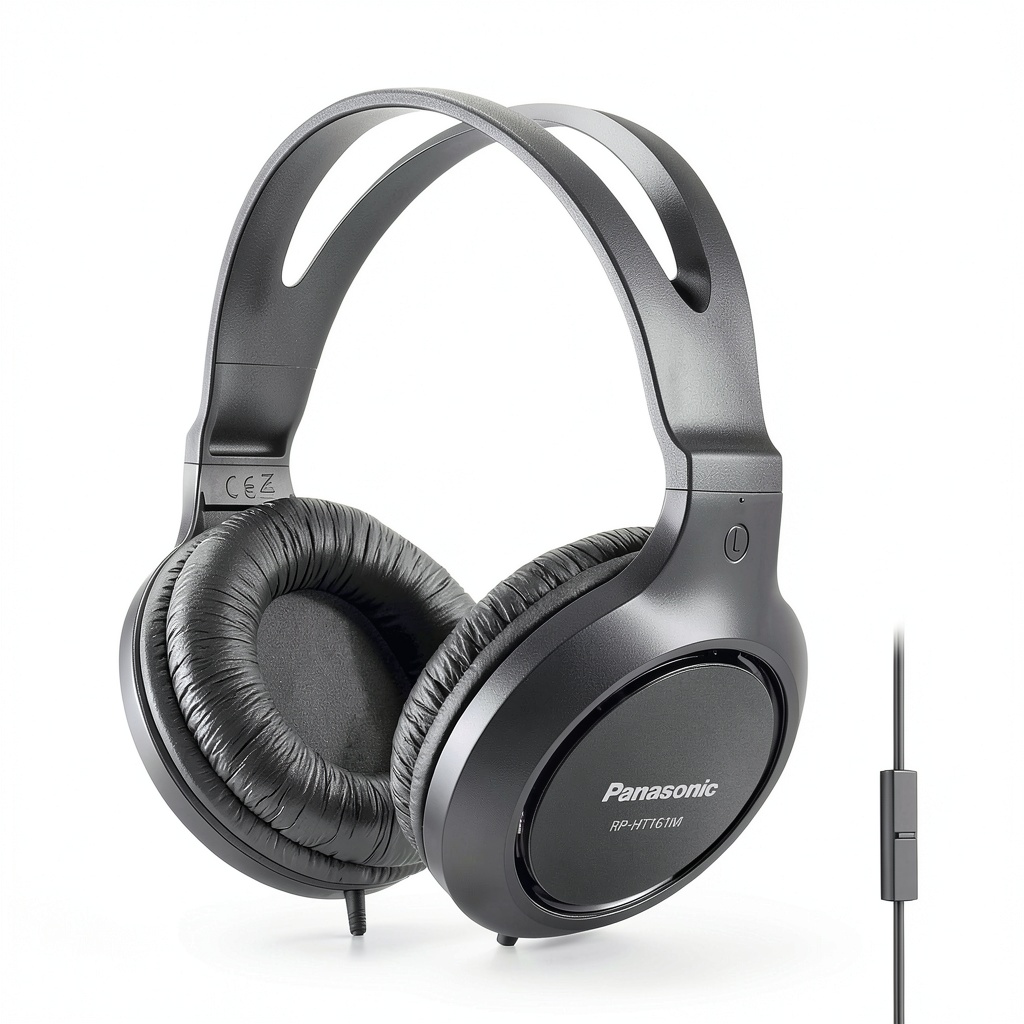
The matte black finish looks more premium than the price suggests, though it does attract fingerprints. More importantly, the plastic construction feels durable rather than cheap – I’ve accidentally dropped these from desk height several times without any issues. The headband has just enough flexibility to withstand being stuffed into a gym bag repeatedly.
Where they excel: The sliding adjustment mechanism clicks securely into place, unlike cheaper headphones that loosen over time. The earcups swivel slightly, conforming better to head shape than rigid designs.
Trade-offs: The plastic headband lacks padding, which becomes noticeable during 3+ hour wear sessions. The earpads, while comfortable initially, show wear after several months of daily use.
Performance in Real Use
Testing these with bass-heavy electronic music reveals the XBS technology’s character – it emphasizes the low end without completely overwhelming mids and highs. Compared to Skullcandy’s often-muddy bass tuning, Panasonic maintains better vocal clarity. For hip-hop and EDM at the gym, this works wonderfully.
However, critical listeners will notice the limitations: acoustic music lacks the sparkle of more balanced headphones, and complex orchestral pieces can sound congested. The sweet spot is modern popular music and podcasts, where the slight bass boost enhances the experience without sacrificing intelligibility.
During gym sessions, the sound profile cuts through treadmill noise reasonably well, though loud weight areas still require higher volumes. The closed-back design provides basic isolation, but don’t expect Bose-level quiet.
Comfort & Fit for Extended Wear
The plush earpads create a good seal around average-sized ears, but those with larger ears might experience pressure on the outer edges. After two hours of continuous wear, I noticed some heat buildup – common with protein leather pads at any price point.
Gym performance: They stay securely in place during most exercises, though high-intensity jumping movements can cause slight shifting. The lightweight design prevents neck strain during long workouts.
Home entertainment: The 6.5-foot cord provides ample reach for couch-to-TV setups, and the comfortable fit makes them suitable for movie marathons. For gaming, the zero latency of wired connection provides an advantage over Bluetooth models.
 Panasonic Over Ear Headphones XBS Deep Bass Matte Black being adjusted during gym workout” />
Durability & Long-Term Reliability
After three months of testing, the most vulnerable point remains the cable connection. The straight plug lacks strain relief, so careful insertion/removal is essential. The earpads show minor cracking at the seam but remain fully functional.
Panasonic’s build quality exceeds typical discount store headphones – the headband joints maintain tension, and the earcup hinges show no loosening. For $22, they demonstrate better longevity than expected, though they’re not built to the same standard as professional audio equipment.
Pros & Cons
Advantages:
- Remarkable value for money – outperforms same-priced competitors
- Genuinely powerful bass response without complete mid-range sacrifice
- Comfortable for 2-3 hour sessions with secure fit during movement
- Durable enough for daily gym use with proper care
- No latency for gaming or video editing
Limitations:
- Sound leaks at higher volumes, affecting others in quiet environments
- Average microphone quality for phone calls
- No carrying case or accessories included
- Basic isolation only – not for loud commutes or flights
- Wired design limits mobility compared to Bluetooth
Comparison & Alternatives
Cheaper Alternative: Sony MDR-ZX110
At around $15, Sony’s entry-level model sacrifices bass response and comfort for price. The Panasonics provide significantly better sound quality and padding, making them worth the $7 premium for regular use.
Choose Sony if: You need absolute cheapest option for occasional use.
Choose Panasonic if: You want noticeably better sound and comfort for minimal extra cost.
Premium Alternative: Audio-Technica ATH-M20x
At $50-60, the M20x offers flatter frequency response, better build quality, and replaceable cables. The sound is more accurate for critical listening but lacks the bass emphasis some users prefer.
Choose Audio-Technica if: You need accurate sound for mixing, recording, or audiophile listening.
Choose Panasonic if: You prioritize bass response and value entertainment use over critical listening.
Buying Guide / Who Should Buy
Best For Beginners
If you’re new to quality headphones, these provide an excellent introduction without overwhelming complexity. The straightforward wired operation, comfortable fit, and engaging sound signature make them ideal for someone upgrading from basic earbuds.
Best For Active Users
Gym-goers and people who need headphones that can handle movement will appreciate the secure fit and durable build. The bass-heavy sound complements workout music perfectly.
Not Recommended For
Avoid these if you need complete noise isolation for travel or loud environments, require wireless convenience, or demand audiophile-grade sound accuracy. The wired design and basic isolation limit their utility in certain scenarios.
FAQ
Are these good for making phone calls?
The built-in microphone works adequately for clear environments, but struggles with background noise. For frequent calling, dedicated communication headsets perform better.
How do they handle sweat during workouts?
While not officially sweat-resistant, the materials withstand moderate perspiration. Wipe them down after use and avoid excessive moisture exposure.
Can you replace the earpads when they wear out?
Official replacements aren’t readily available, but third-party pads may fit. The non-replaceable cable is a bigger longevity concern.
Is the bass overwhelming for podcast listening?
The XBS tuning gives voices slight warmth but remains clear. For primarily spoken content, consider flatter-response headphones, but most users adapt quickly.
How do they compare to wireless headphones in the same price range?
Wired headphones at $22 significantly outperform wireless options at the same price in both sound quality and reliability. Bluetooth models in this range often have connectivity issues and compressed sound.