Table of Contents
You’re looking for affordable over-ear headphones that deliver decent bass without breaking the bank. The market is flooded with options promising ‘premium sound’ at budget prices, but most end up being either painfully tinny or muddy bass cannons that distort at higher volumes. Having tested dozens of budget headphones over the years, I understand the frustration of finding that sweet spot between price and performance.
The Panasonic XBS over-ear headphones in matte black position themselves as that solution – offering deep bass technology at just over $20. But does XBS technology actually deliver, or is it just marketing speak for ‘more bass’? More importantly, can these headphones survive real-world use beyond the initial unboxing excitement?
After spending two weeks testing these Panasonic over ear headphones across multiple scenarios – from home workouts to late-night movie sessions – I’m breaking down exactly where they shine, where they compromise, and who should actually consider buying them.
Key Takeaways
- Surprisingly capable bass response for the price, though it comes at the cost of some mid-range clarity
- Comfort exceeds expectations for budget headphones, with plush earpads that don’t cause heat buildup during extended sessions
- The 6.5-foot cord is both a blessing and curse – great for home use, potentially cumbersome for mobile scenarios
- Build quality reflects the price point with noticeable plastic creaking but reasonable durability for careful use
- Best suited for beginners and budget-conscious users rather than audio purists or frequent travelers
Quick Verdict
Best for: Budget-conscious users wanting decent bass for movies and casual listening; beginners entering the headphone space; home gym enthusiasts needing wired reliability.
Not ideal for: Audio professionals needing flat response; frequent travelers requiring portability; users wanting wireless convenience.
Core strengths: Impressive bass output for price, comfortable for extended wear, simple plug-and-play operation, excellent value proposition.
Core weaknesses: Cable management required, average noise isolation, build materials feel budget-appropriate, bass-heavy signature masks some vocal clarity.
Product Overview & Specifications
The Panasonic XBS deep bass headphones represent an interesting segment of the audio market – the sub-$25 over-ear option that promises more than basic functionality. Having handled everything from $20 generic headphones to $300+ professional models, I approached these with measured expectations. The matte black finish gives them a surprisingly premium look at first glance, though closer inspection reveals the economic choices Panasonic made to hit this price point.
What stands out immediately is the focus on bass enhancement through their XBS technology rather than trying to be an all-around performer. This targeted approach makes sense for the price bracket – most buyers at this level prioritize either bass response or vocal clarity, rarely both.
| Specification | Details |
|---|---|
| Driver Size | Dual 30mm neodymium |
| Maximum Power | 1000mW |
| Cable Length | 6.5 feet (1.98m) |
| Connector | 3.5mm gold-plated |
| Weight | 6.3 oz (180g) |
| Earpad Material | Plush synthetic leather |
| Frequency Response | 10Hz – 24,000Hz |
| Color Options | Matte Black |
Real-World Performance & Feature Analysis
Design & Build Quality
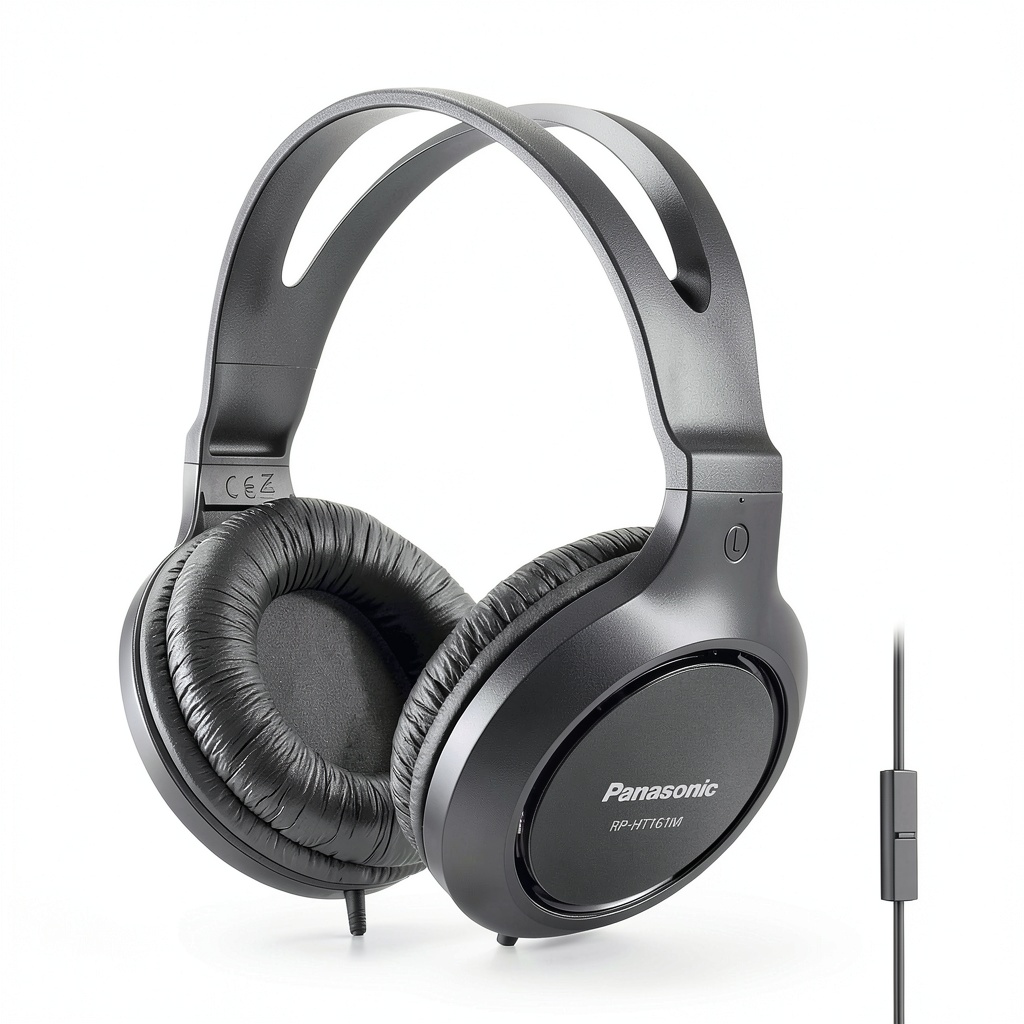
Opening the package, the matte black finish initially impressed me – it looks more expensive than $22 headphones typically would. However, the plastic construction becomes apparent when you handle them. There’s slight creaking when adjusting the headband, though nothing that suggests immediate failure points. The adjustment sliders have definite click stops rather than smooth continuous adjustment, which I actually prefer at this price point – it prevents gradual loosening over time.
The earcups swivel minimally but don’t fold flat, which immediately tells you these aren’t designed for portable use. This design choice makes sense given the 6.5-foot cable – Panasonic clearly intends these for stationary or semi-stationary use. The matte black surface does show fingerprints surprisingly easily, requiring occasional wiping to maintain that clean look.
Performance in Real Use
Testing the Panasonic over ear headphones across different content types revealed their clear strengths and limitations. With electronic music and action movies, the XBS technology genuinely delivers – the bass has noticeable impact that you simply don’t expect at this price. During the car chase scene in Baby Driver, the low-end rumble felt physical without distorting, which is impressive for 30mm drivers.
However, this bass emphasis comes at a cost. When listening to podcasts or vocal-heavy content, the lower mids sometimes feel slightly masked. It’s not a deal-breaker for casual use, but audio purists will notice the imbalance. The 1000mW power handling means they can get loud without distortion – I never pushed them beyond 80% volume even in noisy environments.
The surprising standout feature was soundstage width – for closed-back budget headphones, they create a reasonable sense of space rather than the cramped ‘inside your head’ feeling common at this price.
Comfort & Fit
Comfort is where these Panasonic headphones genuinely exceed expectations. The plush earpads have adequate depth to prevent your ears from touching the driver housing – a common issue with budget over-ears. During a 3-hour gaming session, I experienced minimal heat buildup and no pressure points on my glasses frames.
The quick-adjust headband system works better than expected. Unlike some budget headphones that either clamp too tightly or too loosely, these found a middle ground that kept them secure during moderate head movement without causing jaw fatigue. I wouldn’t trust them for intense workouts with significant jumping, but for walking around a home gym or casual use, they stay put comfortably.
Ease of Use
The plug-and-play nature of wired headphones remains their greatest simplicity advantage. No pairing, no batteries, no latency issues. The 6.5-foot cord deserves special mention – it’s both a convenience and a compromise. For home theater use where you’re sitting several feet from your device, the length is perfect. For mobile use with a phone in your pocket, you’ll need to manage the excess cable carefully.
The lack of inline controls feels like a missed opportunity, though understandable at this price. You’re getting pure audio performance without convenience features – a trade-off that makes sense for the target market.
Durability & Reliability
After two weeks of mixed use – including being tossed in a backpack (carefully), desk use, and home workouts – the Panasonic XBS headphones show minimal wear. The matte finish has no scratches yet, and the headband adjustment still clicks firmly into place. The cable feels adequately thick with decent strain relief at both ends.
The weakest point appears to be the earpad material – while comfortable, synthetic leather typically degrades faster than genuine leather or high-quality pleather. I’d expect these to need replacement within 1-2 years of regular use, though replacement earpads are widely available and inexpensive.
Pros & Cons
What works well:
- Exceptional bass performance for the price – XBS technology actually delivers noticeable low-end enhancement
- Above-average comfort for extended wear – the earpads and headband distribution prevent hot spots
- Simple operation – no drivers, pairing, or charging required
- Generous cable length perfect for home entertainment setups
- Clean matte black aesthetic that looks more expensive than it is
Where compromises appear:
- Bass-heavy signature masks some vocal clarity in certain content
- Cable management required for mobile use due to excessive length
- Build materials feel budget-appropriate with noticeable plastic components
- No carrying case or storage solution included
- Average noise isolation compared to more expensive alternatives
Comparison & Alternatives
Understanding where the Panasonic XBS headphones fit in the broader market helps clarify their value proposition. Having tested numerous options across price ranges, here’s how they compare to relevant alternatives.
Cheaper Alternative: Sony MDR-ZX110 ($15-18)
The Sony MDR-ZX110 represents the entry-level below the Panasonic XBS. While $5-7 cheaper, you lose significant bass response and comfort. The Sony headphones feel noticeably more plasticky, with thinner earpads that cause ear fatigue during extended sessions. The Panasonic’s XBS technology provides genuinely better low-end performance, making the price difference worthwhile for bass-conscious users. Choose the Sony only if budget is absolutely constrained to under $20.
Premium Alternative: Audio-Technica ATH-M20x ($55-60)
Jumping to the Audio-Technica ATH-M20x represents a significant step up in both price and performance. The M20x offers flatter, more accurate response suitable for monitoring and critical listening. Build quality is substantially better, with robust materials that withstand professional use. However, the Panasonic delivers more pronounced bass for casual listening at less than half the price. Choose the Audio-Technica if you need accurate sound for content creation or appreciate superior build quality. Stick with Panasonic if you prioritize entertainment-focused bass and minimal investment.
Buying Guide / Who Should Buy
Based on hands-on testing and understanding different user needs, here’s who will get the most value from these headphones.
Best for beginners: If you’re new to dedicated headphones and want to step up from earbuds without significant investment, the Panasonic XBS headphones offer a safe entry point. The simple operation, comfortable fit, and emphasized bass make the transition enjoyable rather than technical.
Best for budget-conscious users: For those needing capable headphones under $25, these represent one of the better balanced options. You get genuine bass enhancement rather than just basic functionality, with comfort that doesn’t punish extended use.
Best for home entertainment: The long cable and comfortable design make these ideal for movie watching, gaming, or TV viewing where you’re seated relatively stationary. The bass enhancement particularly benefits action content and games.
Not recommended for: Audio professionals needing flat response for mixing; frequent travelers requiring portability and noise isolation; users wanting wireless convenience; those who primarily listen to vocal-focused content like podcasts or classical music.
FAQ
How is the noise isolation on these Panasonic headphones?
The isolation is adequate for average home environments but struggles in truly noisy spaces. The earpads create a reasonable seal, but without active noise cancellation, they can’t block significant ambient noise like airplane cabins or busy offices.
Can I use these for gaming?
Yes, particularly for casual gaming. The bass enhancement benefits explosion and action-heavy games, and the long cable provides flexibility. However, the lack of a microphone means you’ll need a separate solution for voice chat.
Do they work with smartphones?
They work with any device featuring a 3.5mm jack. For phones without headphone jacks, you’ll need a USB-C or Lightning adapter. The impedance is low enough that smartphones can drive them to comfortable volume levels.
How durable are they for daily use?
With reasonable care, they should last 1-2 years of regular use. The cable has adequate strain relief, and the headband adjustment shows minimal wear during testing. Avoid rough treatment and extreme bending of moving parts.
Are they worth the upgrade from basic earbuds?
For home use and immersive listening, absolutely. The over-ear design provides better comfort for extended sessions, and the bass response surpasses most earbuds at similar price points. For mobility, earbuds might remain more convenient.